deercún

Gaelic Art, Graphics & Research

Menu

Skip to content
  • Graphic Design
  • Knowledge
  • Illustration
  • Tír na dTrí (Webcomic)
  • About+Contact

Home

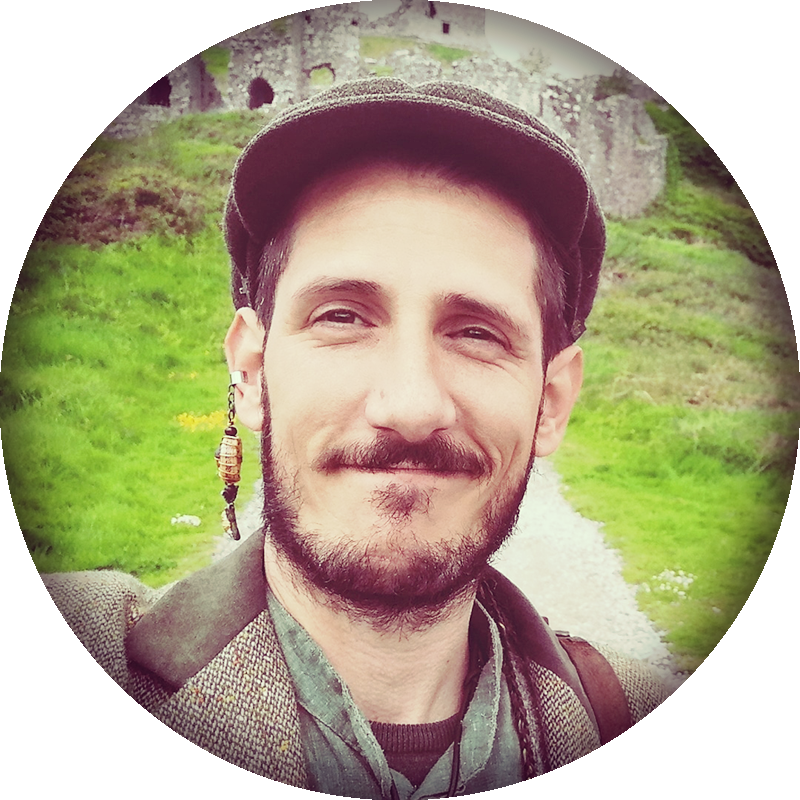
Dia duit! My name is Santiago, I’m an Argentinian Graphic Designer and Illustrator living in beautiful Sliabh na Caillí (Loughcrew) in Co. Meath, Ireland. I also research and produce educational material about Gaelic Studies, from history and mythology to language, society and culture.
Graphic Design

See the range of Graphic Design services I offer.

Knowledge

Learn about Gaelic Studies through articles and informational posts.

Illustration

Check out my illustration work or commission your own.

Tír na Trí (Webcomic)

Read an absurd and endearing web-comic based on Gaelic Ireland.

About + Contact

Find out more about me and my journey, and get in touch!

Latest Instagram Posts

Fosterage in Gaelic Ireland, alongside less savoury customs  as slavery and micromanaging hierarchy, was a pillar for the functioning of society. Traditionally, noble  children would be fostered to other noble families between the ages of 7 to 14, though fosterage wasn't exclusive to the higher classes. This practice wove a series of kinship threads that ensured strong ties amongst different families within the same Túath, reducing inner tribal conflicts and strengthening loyalty bonds. Obviously I'm biased as the @gaelicwoodlandproject is so close to my heart and soul, but I am delighted with the process of this logo for our new branch of @cnagaeilge A fashionably late article about some really interesting things about the St. Patrick medieval propaganda and how I think it led to the planned militar AND ecclesiastical Norman invasion of Ireland. I can finally show off the design of the first album by @caoimhinceol which I'm honored to have provided the visuals to. I've so much respect and admiration for this artist who independently went and recorded his own album, and I want his version of 'Beidh Aonach Amárach" played at my funeral 😁✨️ I will never not-love the fact that Sheela-na-Gigs will always be there to remind us that we know and understand waaay less about Early Irish Christianity than many authors and scholars like to believe. Though it is widely known that Gaelic noble women had a surprising amount of rights that other societies didn't give women until hundreds of years later, it is also true that these rights and liberties depended vastly on who was her closest male kin. Be it father, brother, husband or King, her worth and freedoms were still tied in most cases to a man, even in the cases where she practiced a profession or owned her own land. For this and other reasons, it was indeed the fate of many Gaelic women to be used for political strategy, in many cases being passed around different husbands whichever way the political winds were blowing. A good example (although from a much later time) was Gormlaith (960–1030), a daughter of the King of Leinster. She was married to the Viking King of Dublin and gave him a son who became King of Dublin in his place. After his defeat by the emerging Irish King Brian Boru, she was given in marriage to Brian, and it is possible that before that she was also married to the then High King of Ireland, Máel Sechnaill (though the sources are less clear on this one). Regardless, the point is that this was not an uncommon cultural practice. A "tonsure" is the custom of partially shaving off an area of hair as a sign of spiritual devotion, and it was BIG during the Middle Ages. Different countries and religious orders had their own tonsure styles, so it was also a way to show your allegiance to your specific monastery or doctrine. The specific tonsure style of the early Irish monks is still a matter of debate: in modern times it is widely presumed to have been shaved at the front of a line going ear to ear through the middle of the head; but this was posited by a Benedictine scholar in 1703 and, according to more modern research, it goes against evidence from the 6th, 7th and 8th centuries. Who inhabited the island before the Gaels? Where does Irish Mythology come from? Who were the Irish god-people? How was an early Irish monastery organised? Why were the Vikings never really expelled? Were the first invaders from Britain actually English? Why did a famous Irish Pirate Queen bent the knee to the English Queen? How did the Anglo-Irish aristocracy come to power? Where did the potato blight come from? How did a rediscovered Gaelic past inspire the people to Rise? What is Irishness? The fact that someone in the Middle Ages had the CHEEK to get onto the manuscript of what would eventually become known as The Book of Kells and draw a little man with his willy out, will forever be one of my favorite, most wonderfully revealing thing about Early Irish Christianity.
Widgets

hello@deercun.com • Design & Artwork by Séamus Draoigall • All rights reserved © 2023

Blog at WordPress.com.
  • Subscribe Subscribed
    • deercún
    • Already have a WordPress.com account? Log in now.
    • deercún
    • Subscribe Subscribed
    • Sign up
    • Log in
    • Copy shortlink
    • Report this content
    • View post in Reader
    • Manage subscriptions
    • Collapse this bar
 

Loading Comments...